
DOOH + online advertising = pDOOH and its 4 main advantages
pDOOH: Algorithmic procurement technologies have made OOH advertising an essential element of marketing.
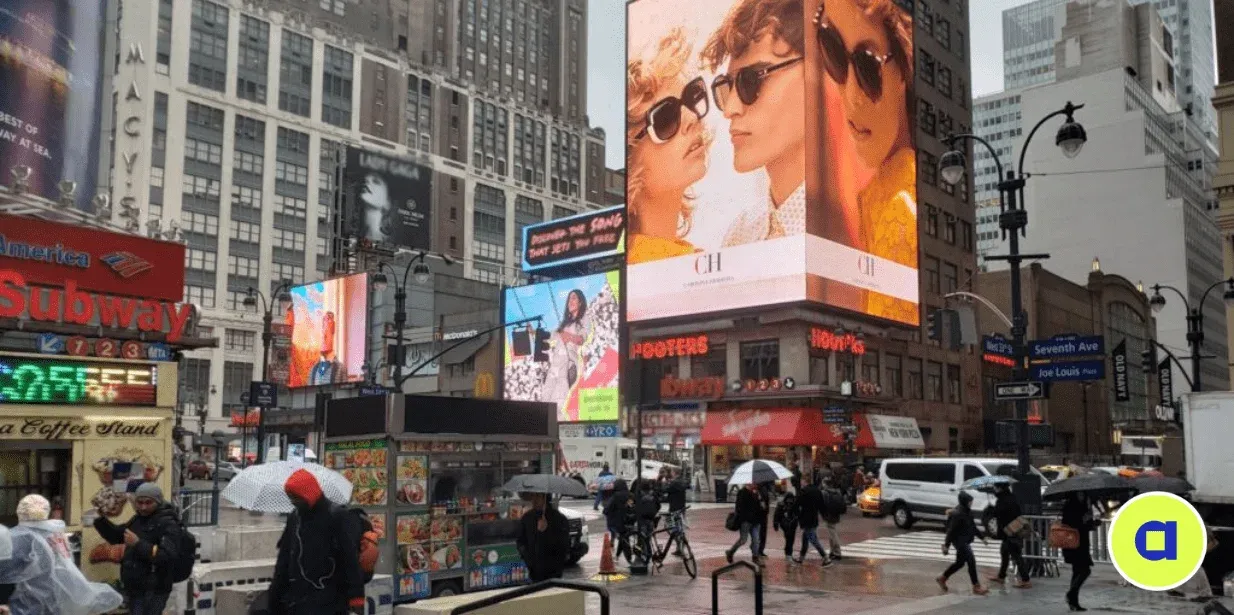
The measurability, precision, and effectiveness of pDOOH are now at the level of the most advanced digital media.
Enhanced by “programmatic,” outdoor advertising now integrates much easier into the media mix, alongside other digital media. Advertisers like it because it offers them a fresh method of communication with the audience, who have grown tired of the old intrusive Display, Search, and Social formats within the confined space of the screen.
Let’s see what the main advantages of pDOOH are compared to other channels.
1. “Buying” TA, not buying ad space
The pDOOH format, tracking audience data in “here and now” mode, allows advertisers to choose the best time and place to display ads – with the highest probability of reaching the target audience. “Programmatic” carefully selects advertising structures, based on the model of people’s movement on the streets. Unlike “static” methods, an outdated way of selecting carriers based solely on the location of advertising inventory, it is unable to reflect changes occurring in the audience’s life throughout the day. Through pDOOH, advertisers can measure the effectiveness of advertising by comparing its impact data on the TA with mobile and location data. This makes targeting finely and operatively adjustable, and the evaluation of its results – maximally relevant.
Digital advertising has replaced the old “shooting sparrows with cannons” approach. The pDOOH direction communicates with the audience in a “one-to-many” system, and the return from this communication is significant. This pleases advertisers, who are already starting to enjoy the high-precision targeting and even more precise verification.
2. Your advertisement won’t get lost among other messages
Starting from the turn of the “zeros” and “tens,” search and social advertising boomed on the internet – channels where evaluating impressions, conversions, and the cost of acquiring each customer became incredibly simple. The flip side of this simplicity was an ever-increasing flow of advertising. This boundless “ocean” began to tarnish the reputation of both brands that “flooded” Facebook and Google with their ads and the platforms themselves, leading to a decrease in advertising effectiveness there.
Unlike the aforementioned channels, the pDOOH format provides advertisers with a “platform” to reach people outside of their home internet environment. Instead of relying on dry, cold algorithms and trying to “catch” a consumer when they’re busy reading alarming news on the internet and clearly not receptive to ads, you can try using pDOOH to communicate with people enjoying a walk down the street, where a billboard’s message could become the subject of lively conversation, vigorous discussion, and even acquaintances among passersby. pDOOH carriers allow brands to capture the attention of open and relaxed individuals, possibly in a good mood.
3. Context is back on top – and pDOOH is the modern top technology
Digital advertising is largely returning to context. It becomes important again to “capture” the audience in the right place and at the right time. Doubtful from the perspective of personal data security, behavioral targeting, which digital advertising has relied on for many years, is losing ground. The pDOOH direction takes context into account, giving advertisers the opportunity to catch their target audience in various public spaces and at moments when the brand’s message “fits” them, maximizing its relevance to the surrounding environment.
Advertising for cool beverages brands will look great in a grocery store during summer, while food delivery companies will be best suited for trams during rush hours when hungry passengers are rushing home from work. DOOH displays are located in shopping malls, liquor stores, gyms, public transport, taxis, medical facilities, etc. Such diversity allows advertisers to carefully organize communication in a wide variety of real-life contexts – and spend the time of this advertising campaign with maximum mutual benefit for both parties involved.
4. The ability to quickly change the course of an advertising campaign
Significant time investments in preparation and placement are one of the main drawbacks of traditional outdoor advertising. Launching a campaign in this sector can take weeks – during this time, advertisers and contractors will be addressing various issues regarding the production and placement of advertising materials. In the digital “outdoor” realm, everything is faster and simpler. Identifying the target audience, creating and adjusting narratives for different contexts are done instantly: it may only take ten minutes to launch a campaign.
Advertisers constantly find themselves working in an environment where the phrase “time is money” is more than just words. For example, there may suddenly be a need to launch a vibrant advertising campaign for various reasons: perhaps there’s an “extra” budget that needs to be added to the current campaign or promptly organized for a new one; maybe there’s a need to “rev up” performance in a lagging city; or perhaps there’s a sudden need to change the creative due to rapidly changing circumstances, and so on.
Having considered the main advantages, we can now delve into a more detailed understanding of pDOOH.
Softened communication and transparency in commercial relationships
The modern advertising world demands maximum efficiency from its participants in all aspects of an advertising campaign: monitoring its progress in real-time, adjusting information strategies as audience behavior changes.
Transparency in commercial matters within the advertising industry is also one of the detailed modern trends. pDOOH has many functions for cost management and minimizing irrational expenditures of the advertising budget. The pDOOH format fully meets all the aforementioned needs of marketing professionals, providing them with great flexibility to implement communication strategies with the audience.
People have long grown tired of constant negativity and screens cluttered with ads on their gadgets — what channels like TV, Display, Search, Social generously “feed” them. Communication from screens placed not in your pocket or your home but on the streets or in nearby supermarkets seamlessly integrates into urban social life and doesn’t evoke a sense of “intrusion” into private life.
pDOOH carriers combine the advantages of both outdoor OOH format (an excellent mass communication tool) and digital (high-precision targeting and effectiveness assessment), ensuring the highest levels of creativity, measurability, and adaptability. Thanks to these qualities, the channel is increasingly confidently occupying its deserved place in the media mix.
Everyone understands that the modern advertising industry is evolving rapidly, and new technologies are constantly changing the ways brands interact with their audience. One of the leading trends is the merger of Digital Out Of Home (DOOH) advertising with internet advertising – programmatic DOOH, which opens up new opportunities for product and service promotion companies.
pDOOH uses digital billboards to deliver advertising messages to audiences on the streets, in stores, airports, and other public places, applying tools and metrics from the internet advertising industry. By using modern software for digital billboards, it’s possible to integrate internet technologies with offline advertising formats.
Through such integration, advertisers can replicate the internet advertising content in various formats on any personal devices and DOOH advertising inventory. pDOOH and DOOH Display Solutions software make this form of advertising more dynamic and effective, allowing brands and advertisers to quickly change content depending on audience needs or external environmental conditions.
How programmatic DOOH advertising works
Creating and launching an advertising campaign on digital screens can be done independently using digital signage software and video wall software, integrated with programmatic platforms – automatic advertising buying services. These platforms allow setting the target audience, display time, and selecting locations for placement.
The primary payment model is auction-based, per 1000 OTS (Opportunity-to-See – the number of ad contacts). The platform in real-time determines how many members of the target audience will see the ad and selects the optimal moment for its display.
Audience information is collected using a Wi-Fi monitoring system, which identifies users by the MAC address of their phone or other device. Additionally, companies receive operator data regarding geolocation and video analytics from cameras embedded in the advertising structure. All user information is anonymous and depersonalized.
Digital screen networks can utilize internet data such as current weather, road conditions, or sports event results. They can also integrate with the company’s information system. Using centralized video management systems allows advertisers to easily control content on multiple screens simultaneously, change it in real-time, and receive reports on the effectiveness of each advertising campaign.
The merging of DOOH advertising with internet advertising means that advertising screens can be connected to the internet and display content that rapidly changes in real-time, similar to online advertising. An SSP connector serves as a tool for connecting DOOH networks with programmatic platforms – a special module of CMS software for remote content management, ensuring high-quality internet ad playback without delays and at the desired time intervals in ad scheduling.
Technical challenges facing DOOH media owners
A crucial technical challenge for DOOH media owners is ensuring continuous internet access. This enables instant reception of new advertising announcements coming from auction models. Additionally, it’s important to promptly confirm advertising creatives and organize all screens and partners into structured packages for further presentation on DSPs.
For leading market players with proprietary or leased digital signage software and content management systems (CMS), the future task will involve connecting to the DSP technical stack through connectors for seamless integration of the full stack. However, this is currently not mandatory, and it’s possible to start selling DOOH inventory without direct integration.
Furthermore, for effective operation in this segment, a centralized video management system is crucial, allowing content management on all screens from a single control point. This contributes to increased efficiency in managing advertising campaigns and ensuring consistent content quality across the entire DOOH network.
The integration of DOOH with internet advertising offers numerous advantages for brands and advertisers. They can capture audience attention not only through static images but also through dynamic video content that easily adapts to changing conditions. Additionally, internet connectivity enables real-time data collection on the effectiveness of advertising campaigns and swift adaptation of promotion strategies to achieve better results.
It can confidently be stated that in 2024, the market understands that pDOOH advertising provides the most powerful advantage for the advertising industry. It’s also undeniable that the use of pDOOH digital signage software, external digital billboards, video wall software such as centralized video management system, enhances operators’ profitability, attracts audience attention, and delivers high results to advertisers.
Advision — Content Management System for remote management and media planning of broadcast video and audio content. We help offline businesses and advertising companies automate workflows and implement a robust Digital Signage infrastructure using our proprietary software and hardware solutions.
Contact us, and we will help you implement the most modern technologies to solve your problems!


