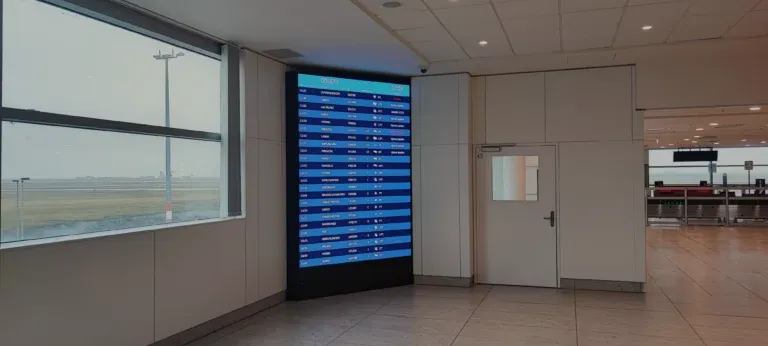
Digital Signage technologies in transportation for 2024
Digital Signage technologies have become an integral part of various industries, and transportation is no exception.

Stations, airports, and vehicles serve numerous passengers daily who need instant access to schedules, route numbers, exit maps, and other essential information. Software for digital screens successfully supports these needs: digital displays provide broad opportunities for passenger information, advertising, and communication. This article will examine how Digital Signage is transforming the transportation sector and what prospects it opens for professionals.
Definition and advantages of Digital Signage
Digital Signage is a system of digital screens installed in public spaces to display important content.
DS technology offers incredible opportunities to enhance the passenger experience, deliver information, and create effective advertising campaigns. Here are a few key advantages:
Appeal of the format
Animation, vibrant colors, and dynamic content make Digital Signage a far more attractive tool compared to traditional printed materials. People are more likely to notice a digital screen than a static poster.
Ease of perception
Printed signs are hard to see from a distance. Displays, however, are visible from afar, at any time of day, and in any weather conditions.
Interactivity
Touch screens elevate communication with passengers to a new level. Interactive elements allow users to independently search for necessary information and interact with it through specialized software and digital screen players.
Rapid information updates
In the transportation world, the speed of information updates plays an essential role. Digital advertising and Digital Signage players allow for easy changes, editing, and management of any content in real time from any location with internet access.
How and why can Digital Signage be used in transportation?
Schedules
The most popular use of Digital Signage in transportation is displaying schedules: arrival and departure times, possible delays, gate changes, and other important announcements. The schedule can also be made interactive, allowing passengers to access additional information about routes, stops, and more.
Advertising and revenue generation
With the advancement of technology and relevant platforms, there are extensive opportunities for broadcasting advertising content on screens, making them a powerful tool for revenue generation.
Offline digital advertising and Digital Signage players enable targeting content by location, time of day, and specific audience characteristics (gender, age, accessories, emotions, hairstyle, etc.). This increases advertising effectiveness and saves advertisers’ budgets.
Navigation
Most transportation hubs cover a large area. Digital kiosks at entrances or signage placed in strategic locations help ease navigation within these spaces. Many of these signs can be made interactive, allowing passengers to view information such as:
– Floor plans.
– Virtual tours.
– Locations of nearby elevators, cafes, restrooms.
– Available parking spots, spaces for disabled individuals.
– Contact numbers for specific services, and more.
Entertainment and reducing wait time
In transportation hubs, most passengers face long waiting periods before boarding. Therefore, any source of entertainment is a welcome distraction.
With Digital Signage, it is convenient to broadcast news, movies, YouTube videos, live streams, travel content, and much more, which can ease the wait and make it less exhausting.
Safety
The Digital Signage system plays an important role in ensuring safety at transportation hubs. Digital advertising screens and Digital Signage systems allow for quickly displaying instructions and alerts in case of emergencies. This is especially relevant in crowded areas, where loudspeaker announcements might not always be heard.
Modern Digital Signage systems enable instant content updates and can broadcast messages that help guide passengers during evacuations, provide information on nearby exits, evacuation routes, or assembly points. These screens can also display updates on the current status of an emergency, which increases the overall safety level for everyone on site. In critical moments, the Digital Signage system can serve as a key tool for quick and clear communication, helping to reduce risks and avoid panic.
Flexibility of use
Beyond emergencies, the Digital Signage system allows content adaptation according to audience needs or events happening at specific times. With quick content management capabilities, advertising screens can display important updates, from discounts at nearby cafes to real-time information about transportation status or even weather-related announcements affecting the schedule.
Digital Signage technology not only simplifies navigation and enhances the passenger experience but also provides a multifunctional environment where digital screens can be used for multiple tasks simultaneously: from advertising to information and ensuring safety.
Digital Signage in transportation hubs serves not only informational but also integrative functions. In addition to standard schedule displays and advertising, digital screens are actively used to create a visual environment that considers the individual needs of passengers. These systems can serve as platforms for rapid response to real-time events, such as emergencies, schedule changes, or even weather conditions affecting travel schedules.
Modern Digital Signage software supports flexible content settings, allowing administrators to adjust content based on the season, time of day, or passenger flows. For example, in the morning, screens can display information on upcoming flights and news, while in the evening, they can show details about discounts at airport or station restaurants. Such Digital Signage systems effectively adapt to current needs, making the passenger experience more comfortable and intuitive.
Another advantage of Digital Signage systems is their interactivity: screens can respond to the proximity of individuals or groups, creating a personalized interaction experience. These solutions are ideal for large international airports, where passengers from different countries can receive information in their own language or select specific routes or services through touch-screen kiosks.
The analytical functions of Digital Signage software provide valuable data for management: they reveal which areas and announcements attract the most attention, which advertising campaigns are the most effective, and how navigation can be improved. This not only enhances the passenger experience but also optimizes internal processes for the efficient operation of the transportation hub.
In conclusion, Digital Signage for transportation is a modern technology that not only makes travel more comfortable but also creates additional revenue opportunities. Through interactive displays and flexible broadcasting capabilities, this technology enables the quick dissemination of critical updates, transport arrival times, and entertainment during the journey. Digital Signage opens new ways to engage passengers, increases audience loyalty, and provides the opportunity for effective monetization of transportation displays. It’s an ideal solution for transportation companies looking to enhance passenger experiences while also generating additional revenue through advertising content.
Advision — Content Management System for remote management and media planning of video and audio content broadcasting. We help offline businesses and advertising companies automate their workflows and implement a robust Digital Signage infrastructure using our proprietary software and hardware solutions.
Contact us, and we will help you implement the most modern technologies to solve your problems!