How to run an effective DOOH advertising campaign in the metro in 2025
DOOH: The metro is a unique space where thousands of people are present every day, and that is precisely why advertising here is capable of reaching a massive audience.
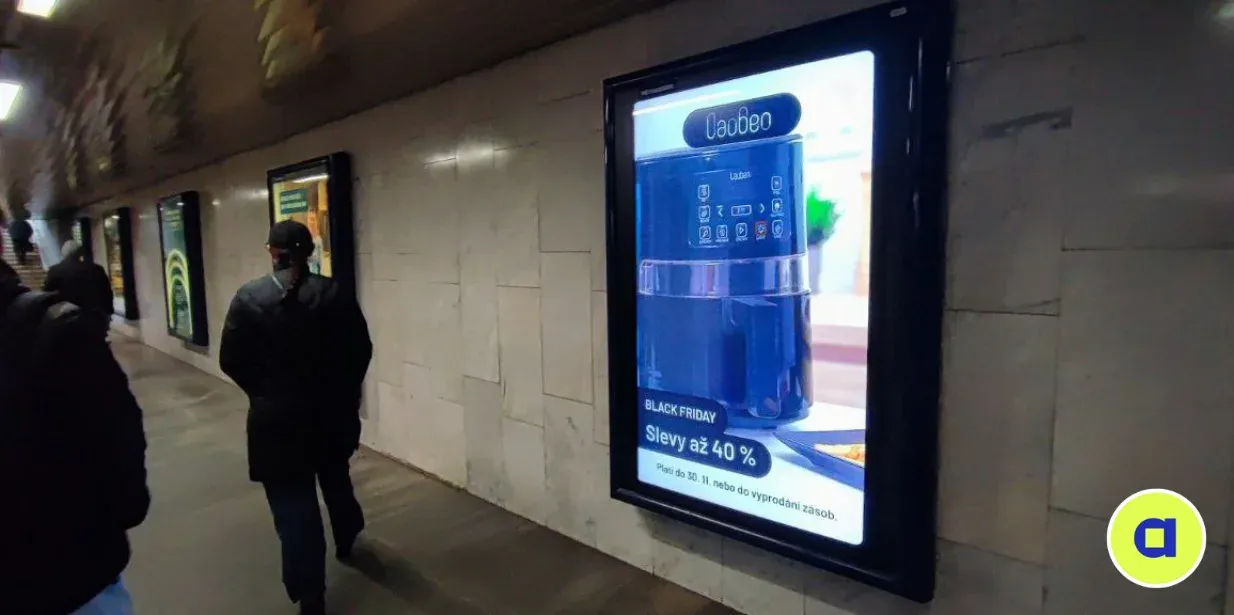
However, effectiveness primarily depends on the quality of the creative: what works outdoors may lose its impact underground due to a different pace of movement, lighting, and passenger behavior. In this article, we will look at the key principles that help create creatives that attract attention and are easy to remember.
In addition to classic posters, modern operators are increasingly using DOOH technologies, in particular digital screens and interactive solutions. They make it possible to adapt content to the time of day, pedestrian flows, or even specific passenger movement scenarios. This opens up the opportunity to flexibly change messages and make them more relevant for different audience groups.
Features of advertising placement in the metro
The metro offers brands a huge number of formats: light panels in passages, stickers in carriages, large posters on platforms, branded doors, and entire trains. Digital channels, including digital displays for transport, make it possible to combine static and dynamic content, adding mobility and liveliness to visual solutions.
1. Limited contact time
A passenger spends only a few minutes on the platform, and in the carriage—although longer—still in a state of distracted attention. People often listen to music or look at their phones, so the key message of the creative must be understandable literally in a second. This is especially relevant for escalator posters that passengers see while moving.
2. Viewing distance and specifics
Escalator panels are perceived from a distance, so large shapes and a minimum of text are important here. On carriage doors or inside the cabin, on the contrary, it is possible to add a bit more detail, but readability in a crowd should still be maintained. Platform posters are visible from many viewpoints—people can look at them longer, especially while waiting for a train.
3. Lighting and contrast
Ideal lighting is rare in the metro. Fluorescent lamps or dim carriage lighting can distort colors, so the creative should be high-contrast, with clear outlines and bright accents. Overly dark layouts are hard to read, while pastel shades can “get lost” on the wall.
4. Psychological state of passengers
People in the metro are often in a state of hurry or mild fatigue. In this context, advertising should quickly evoke an emotion—a smile, interest, sympathy. Creatives with light humor or unconventional imagery work much better than overly aggressive or anxiety-inducing messages. In a confined space, any “shouting” design is perceived more strongly, so maintaining balance is important.
5. Regulations and technical limitations
All advertising materials in the metro undergo approval, and this must be taken into account when developing the concept. Layouts that imitate navigation or images that may cause panic are prohibited. In the case of digital formats, operators require compliance with standards regarding brightness and animation frequency, especially in areas where a train operated by a driver is moving nearby.
Modern systems also provide remote content management, which makes it possible to quickly make edits or launch new display scenarios. This is convenient when updated promotions appear, schedules change, or there is a need to adapt creatives for different stations.
6. Personalization and more precise scenarios
Opportunities for personalization of offers for customers are becoming increasingly important. Even in the metro, content can be configured for morning and evening passenger flows, for routes to business centers or student districts. In combination with modern screen software, this helps brands create more relevant messages and increase the chances of interaction.
Tips for creating creative content for advertising placement in the metro
Creating effective advertising in the underground requires an understanding of audience behavior, lighting, pace of movement, and the specifics of the space. In the metro, people perceive information quickly and fragmentarily, so the creative must be as clear as possible at first glance. Since modern operators are increasingly using digital information panels, it is important to consider how static and dynamic messages interact with each other and influence passengers in motion.
1. Simplicity and conciseness are the basis of effectiveness
An advertising layout in the metro must work in a second. A short headline, minimal text, and a strong metaphor that is easy to read even in motion are of great importance. People will not scrutinize small details, so the creative must immediately convey emotion and meaning. In some metro networks, programmatic DOOH is used, which makes it possible to adapt the message to the time of day, so it is especially important that the core idea is as clear as possible.
2. Large elements and contrasting colors
In the metro, the visual environment is complex: insufficient lighting, passenger movement, and a large number of surrounding objects. Therefore, a successful design should contain large, clear elements and high color contrast. Some DOOH advertising formats, including large LED billboards, enhance the effect through bright, saturated compositions, but even in this case, small details will still not work.
3. Adaptation to the placement location
Design for a platform, a carriage, or an escalator must be different. On the platform, passengers stand for a longer time, so more information can be provided there or a QR code can be added. Along the escalator, short sequential narratives work better. In such scenarios, static posters can be combined with dynamic formats managed through software for LED screens—this makes it possible to more precisely synchronize the creative with the speed of movement.
4. Passengers’ mood and behavior
Metro travelers often feel bored or tired, so advertising with light humor, wordplay, or a clear metaphor works much better than “heavy” or aggressive messages. Local jokes about the city or transport are perceived well. When using video formats, it is important to ensure smooth delivery so that the advertising screen does not overload passengers with unnecessary motion or abrupt transitions.
5. Use of adaptive technologies in the metro
Metro DOOH networks make it possible to display different versions of a creative at different stations or at different times of day. Dynamic content is easily combined with classic formats on walls or in carriages, strengthening brand interaction with the audience. Even static narrative series gain greater effect if they are properly integrated with individual screens or posters placed nearby. In such campaigns, it is important that even a single element works independently, and not only in connection with others.
6. Testing the creative before launch
After preparing the layout, check how it looks from the side, in low light, at different distances, and in fast motion. Even the brightest design can lose its effect if it is difficult to read or if the emotional emphasis becomes blurred. Materials should be tested especially carefully before being displayed on an advertising screen, since brightness and contrast in the metro are perceived differently than in typical interiors.
What to avoid when advertising in the metro (common mistakes)
Advertising campaigns in the metro have their own clear rules and risks. This is due to the non-standard space, fast passenger movement, and a variety of formats. Some common mistakes that are acceptable in classic OOH become critical in the metro, since the time of interaction with the creative is limited to literally a few seconds. In addition, modern operators use analytical tools based on Wi-Fi audience measurement, so poor-quality visuals lose effectiveness even faster.
Excessive verbosity and overload with details
In the metro advertising environment, excess text is the first enemy of effectiveness. Posters with dozens of small phrases, lists, or complex descriptions simply cannot be read under conditions of movement and distracted attention. A person looks at a poster for one or two seconds, and if the meaning is not immediately clear, the advertising will not work. What matters here is clarity, one clear message, and a strong visual anchor. This is especially relevant for dynamic formats broadcast by a digital signage player, since such screens often operate in flow zones where passenger attention is even more limited.
Illegible and overly decorative fonts
In the pursuit of stylization, brands sometimes choose thin or decorative fonts that look attractive in a layout but are completely unreadable at real viewing distances. In the metro, contrast, weight, and clear outlines are critical. The font must remain understandable even at a quick sideways glance. Large sans-serif fonts work best, especially when the creative is integrated into a digital advertising environment, where lighting and color reflections can distort thin lines.
Blending into the surrounding space
An incorrectly chosen color palette is one of the most common mistakes. If the background of a poster matches the colors of station walls or cladding, the advertisement literally “disappears.” The metro contains many dull gray, greenish, and beige tones, so the creative must contrast with them as much as possible. In poorly lit areas, tunnels, or escalator passages, dark layouts should be avoided—their details become unclear. This is especially noticeable in digital formats within the Digital Out Of Home (DOOH) and video advertising environment, where screen brightness and contrast must be selected very precisely so that the content does not get lost in the shadows.
Lack of clear branding and an understandable message
Sometimes a creative focuses so much on emotion or an artistic idea that the brand is not shown at all or is indicated too subtly. As a result, the passenger does not understand what exactly was being advertised. In the metro, this is a critical loss: attention is short, and the message must be recognizable immediately. The logo, name, or a short key message must be large, high-contrast, and visible from a distance of several meters. In networks where a centralized video management system is used, brands can quickly adjust creatives, but basic identification must still be clear at first glance.
Ignoring mood, ethics, and social context
The metro is a public space used by people of different ages, social groups, and cultural backgrounds. Unethical, overly explicit, or provocative narratives can cause complaints and negative reactions. In a confined space, any harsh or aggressive content is perceived more strongly than outdoors. Therefore, it is important to maintain a friendly, neutral, or positive tone. Narratives with light humor, local insights, or a benevolent emotion are considered successful; they work well in an environment of intensive urban communication and enhance the effect of advertising series in metro formats.
Where is the best place to install screens?
Choosing the right location for a digital screen determines up to 70% of a campaign’s success. Under modern conditions, urban advertising works most effectively where high traffic, natural viewing zones, and the possibility of longer contact with content come together. These can include transport hubs, waiting areas, active pedestrian routes, and commercial zones where people move more slowly and are more inclined to notice visual messages.
Practical tips for screen placement
– choose locations with natural points of focus (waiting areas, entrances, queues)
– in transit corridors, use short messages and large visual elements
– in open spaces, pay attention to lighting and reflections
– indoors, install screens at eye level or slightly higher for better readability
– avoid placing too much static advertising next to digital formats in order not to create visual noise
DOOH networks make it possible to strategically place screens so as to reach different audience segments throughout the day. For example, business centers work for an office audience, while transfer stations and stops serve a broad mass flow. It is important to consider not only the number of people, but also the context of their behavior: in waiting areas, advertising can be longer; in transit zones, it should be as dynamic and short as possible.
Technological solutions such as DOOH Display Solutions allow formats to be adapted to different viewing scenarios: vertical screens for narrow passages, widescreen surfaces for façades, and compact panels for interiors. Each format has its optimal place—from large transport hubs to galleries in shopping centers.
Analytics also plays an important role. Thanks to data aggregated by a Supply-Side platform, advertisers can choose locations with the highest reach potential, take audience time patterns into account, and launch content that matches the real behavioral profile of the location. This makes it possible to increase efficiency without increasing the budget.
Advision is a content management system for remote control, media planning of video and audio content broadcasting, and a supply-side platform for monetising advertising time. We also implement a Wi-Fi tracking system to measure quantitative indicators of the advertising audience. We help Digital Signage owners and DOOH advertising operators earn money from advertising, automate work processes, and build a reliable media infrastructure using AdTech and MarTech software solutions.
Contact us if you want to increase your profits and implement the latest technologies to solve your problems!