
Digital Signage: 5 examples of how automation simplifies working with advertising screens
Digital Signage platforms: Automation is the key to success that businesses connected with Martech and Adtech strive to achieve.
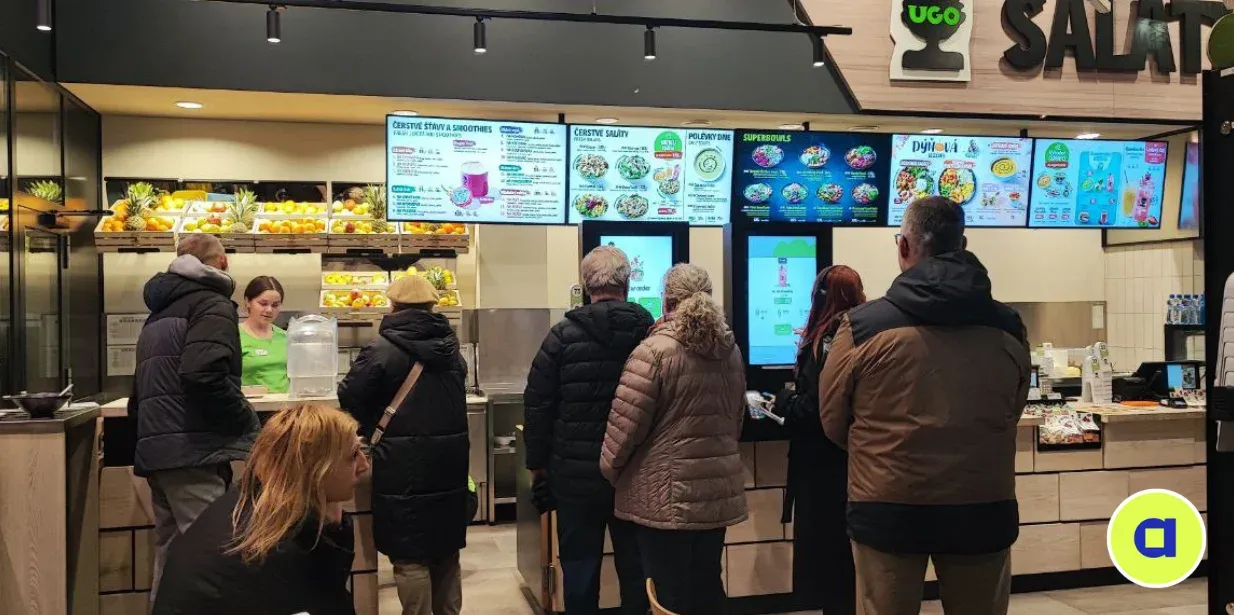
The innovative world of digital signage forms new requirements for business, where the system of digital displays must work stably, quickly, and without unnecessary involvement of personnel. It is important for companies to manage large volumes of content, control the rotation time, configure playlists, and ensure the coordinated operation of the entire network of screens in real time. Due to the constant growth in the number of locations and the increasing load on the infrastructure, it is automation of advertising that becomes the key to the optimal operation of such systems.
Current tools make it possible to significantly reduce the operational burden, because platforms automatically monitor the functionality of displays, the timeliness of updating materials, and the accuracy of playback. Thanks to this, the business gains the opportunity to focus on strategic tasks rather than the daily routine of content management. At the same time, companies can launch new projects faster, test formats, and scale the network using flexible solutions for digital signage.
Why is automation important?
Digital signage covers large areas and includes dozens or even hundreds of advertising screens that are located in different cities and require synchronous operation. Manual management of such a structure turns into a complex, risky, and excessively slow process. The human factor, errors during the updating of materials, untimely launch of campaigns — all this directly affects communication efficiency and financial performance.
Automation makes it possible to eliminate these problems, because systems independently process the schedule, check the integrity of files, monitor the correct transmission of data, and ensure the necessary synchronization without the participation of an operator. This makes the work much more stable and predictable, and the process of updating content — fast and uninterrupted.
Another reason for the importance of automation lies in the ability of a business to respond quickly to market changes. With the help of tools that support the visualization of offers and promotions, companies can change informational blocks literally within minutes. For example, adjust prices, launch promotional offers, or adapt content to specific time intervals. This increases the accuracy of communication and raises the chances of influencing a customer’s decision at the right moment.
Automation also contributes to improved quality control. Platforms analyze the work of the network, record errors in playback, and provide data on views or behavioral reactions of the audience. Based on these insights, companies can optimize campaigns and improve the overall effectiveness of digital signage.
Advantages of automation
Automation becomes a key element of modern Digital Signage networks, because it allows companies to work faster, more stably, and more accurately. One of the most important aspects is the acceleration of operations, as thanks to automatic processes companies can update materials on dozens or even hundreds of screens in a matter of minutes. This significantly increases the flexibility of the business and makes it possible to react quickly to changes in demand or the situation on the market.
Special attention should be given to increased reliability. When most processes are performed automatically, the risk of human error, incorrect file uploading, or untimely publication of materials decreases. The system itself checks the conformity of the format, the integrity of the files, and the correctness of playback, ensuring the most stable display of content.
Automation also makes it possible to significantly save time and financial resources. Teams that previously dealt with routine updates can move on to strategic tasks: analyzing effectiveness, creating higher-quality content, or developing new communication formats. This strengthens the advantages of digital advertising, making it more efficient and effective.
Another important advantage is improved manageability of the network. With the help of automated systems, operators gain access to real-time monitoring: they see the status of each screen, the timeliness of data updates, and possible errors in display. Such management of advertising content makes it possible to maintain high quality of broadcasts without the constant presence of technical specialists at every location.
What can be automated?
1. Uploading and distributing content
One of the most common automation scenarios is centralized uploading of materials to all screens of the network simultaneously. Instead of manually sending files to each device, the company uses software for digital displays that supports content distribution across the entire infrastructure in a few clicks. This greatly reduces the time needed to update campaigns and decreases the number of technical errors.
The automatic system can itself check the content’s compliance with the technical requirements of the devices, the correctness of resolution, the correctness of formats, and the presence of all necessary elements. Thanks to this, the content is shown exactly as intended, regardless of the number of locations. Such an approach creates the basis for personalized digital advertising, which depends on the accuracy and timeliness of updates.
Automation also makes it possible to scale the network without additional time costs: connecting new screens does not require individual configuration — the centralized video management system performs all processes automatically. For large businesses with an extensive infrastructure, this becomes a critically important element of optimization.
2. Creating broadcast schedules
Another important area of automation is the creation and management of broadcast schedules. Instead of manually controlling each individual screen, operators can set a schedule for the entire network or for a group of devices at once. This allows content to be played at the right time, ensuring more thoughtful communication with the audience.
Automated schedules help brands show different content during peak hours, adapt displays to the type of location or time of day, and launch short advertising campaigns without additional manual intervention. Such an approach increases the accuracy of targeting and ensures that the customer sees the most relevant information.
Automatic systems can also take external factors into account: weather, local events, the occupancy of shopping malls, the working hours of the establishment. Based on this data, Digital Signage can switch content dynamically, providing greater value for the business and strengthening the effectiveness of the overall advertising strategy.
3. Performance monitoring
Monitoring the operation of devices and checking the stability of the connection with servers is one of the most important tasks for owners of large digital signage networks. When a Digital Signage player is installed in the system or an Android set-top box is used, the operator must be sure that each screen receives content on time and plays it without interruptions. Any malfunction on one display can negatively affect the entire advertising campaign, so controlling the equipment status becomes critically important.
Automated systems make it possible to track the condition of screens in real time. They analyze the operation of devices, detect connection problems, restart equipment, or send notifications about the need for technician intervention. Thanks to this, companies can respond to malfunctions in time, avoiding downtime and ensuring uninterrupted content display.
Such platforms are also able to generate detailed reports on the state of the network: device activity, uptime, history of failures, and general stability indicators. This helps evaluate the effectiveness of the infrastructure, plan modernization, and maintain a high level of service without the constant physical presence of technical specialists.
Thanks to automatic monitoring, the business gains greater confidence that each screen works as planned and that the content is displayed in the correct format. This ensures the stability of the entire network and allows focusing on creative work and the development of the digital signage strategy.
4. Managed audience segmentation
The newest Digital Signage systems are able to collect and analyze information about people who are located near the displays. Thanks to this, companies gain the opportunity to form more accurate advertising strategies, focusing on the real characteristics of the audience. Such an approach expands targeting possibilities and significantly increases the effectiveness of advertising campaigns.
Audience analysis systems can determine the approximate age, gender, type of behavior, and even the approximate emotional state of a person. When these data are combined with automated algorithms for displaying content, it becomes possible to create adaptive scenarios in which the content changes depending on who exactly is standing in front of the screen. This contributes to the fact that the personalization of the offer for clients becomes more precise and effective.
An example can be a camera with a basic recognition function, which automatically selects content depending on audience parameters. If a young person walks nearby, the system can show modern offers or a dynamic advertising video. If it is an older audience, the content may switch to something more restrained and practical. Such an approach strengthens the interaction between the brand and the client, making the displays more meaningful and purposeful.
Thanks to managed segmentation, companies gain a significant advantage, because their messages become relevant at a specific moment, and the interactive digital advertising itself begins to work much more effectively.
5. Content adaptation to environmental conditions
Weather conditions, lighting level, time of day, or seasonality can affect which content will be most appropriate at a certain moment. Automated systems make it possible to adapt displays in real time, changing materials according to external factors. This helps maintain the relevance of content and makes communication with viewers more natural.
For example, if it is cloudy or raining outside, the system can automatically show offers related to warm clothing, hot drinks, or discounts for indoor establishments. If the weather is sunny, the content may switch to summer promotions, offers for outdoor activities, or entertainment events. Such an approach makes advertising materials closer to the real needs of people at a particular moment.
An Android media player or other playback devices are able to react instantly to changes in conditions thanks to light sensors, integration with weather APIs, or motion sensors. This creates a more flexible and adaptive system that does not require manual intervention. Operators can preconfigure the display logic, and the system will switch scenarios automatically according to the rules.
Adapting content to the environment makes digital signage more vivid, dynamic, and useful for viewers, creating a deeper sense of interaction between the brand and the audience.
Automation VS security
Automation in the field of Digital Signage is connected with the transfer of data to cloud systems and external services, therefore the issue of cyber protection becomes critically important. Companies that manage a large network of screens gain significant advantages from centralized platforms, but at the same time must take potential risks into account. Information protection, access control, and the stability of infrastructure operation are the main elements that determine the reliability of the digital ecosystem.
To highlight real challenges, it is worth identifying the key threats that may arise when using automated systems:
– Loss of important data in the event of server failure or incorrect operation of cloud storage
– Violation of the structure and integrity of content during updating or transferring files
– Targeted hacker attacks that may affect the operation of the screen network or provide access to internal data
Most professional platforms use encryption, two-level authorization, and regular system checks, but responsibility for security also lies with the owner of the infrastructure. Proper processes help significantly reduce risks, so it is important to implement additional control practices.
To minimize potential threats, companies are recommended to follow these preventive steps:
– Regular software updates to close vulnerabilities and maintain up-to-date protection mechanisms
– Creating backup copies of content, which allow the system to be restored quickly in case of failure
– Setting complex passwords and encrypting data, which greatly complicates unauthorized access
A reliable infrastructure creates conditions in which the personalization of the offer for clients can be implemented without risk to confidentiality and network stability. It is security control in combination with technological automation that ensures a balance between convenience and protection in modern digital signage.
How to simplify integration?
A business that transitions to digital solutions should use software for digital signage that includes ready-made modules and automated tools. Thanks to this, companies can launch the system faster and without significant technical difficulties, focusing on content management rather than on configuring the infrastructure.
Cooperation with consultants helps choose the configuration that best meets the company’s needs and ensures stable operation of the equipment in the long term. This is especially important for networks that have many screens or a complex display structure.
Budget assessment also plays an important role: companies should implement those functions that will actually bring financial return in the near future. At the initial stage, basic automation is sufficient, and later it is possible to expand scenarios and move to more complex solutions, such as interactive digital advertising.
Successful integration gives the business the opportunity to work faster, more accurately, and more flexibly, creating a foundation for the stable development of digital communications.
Advision is a content management system for remote control, media planning of video and audio content broadcasting, and a supply-side platform for monetising advertising time. We also implement a Wi-Fi tracking system to measure quantitative indicators of the advertising audience. We help Digital Signage owners and DOOH advertising operators earn money from advertising, automate work processes, and build a reliable media infrastructure using AdTech and MarTech software solutions.
Contact us if you want to increase your profits and implement the latest technologies to solve your problems!


