
7 tips for implementing digital menu in restaurants
Digital menu: when introducing new systems into an existing business, many questions often arise.
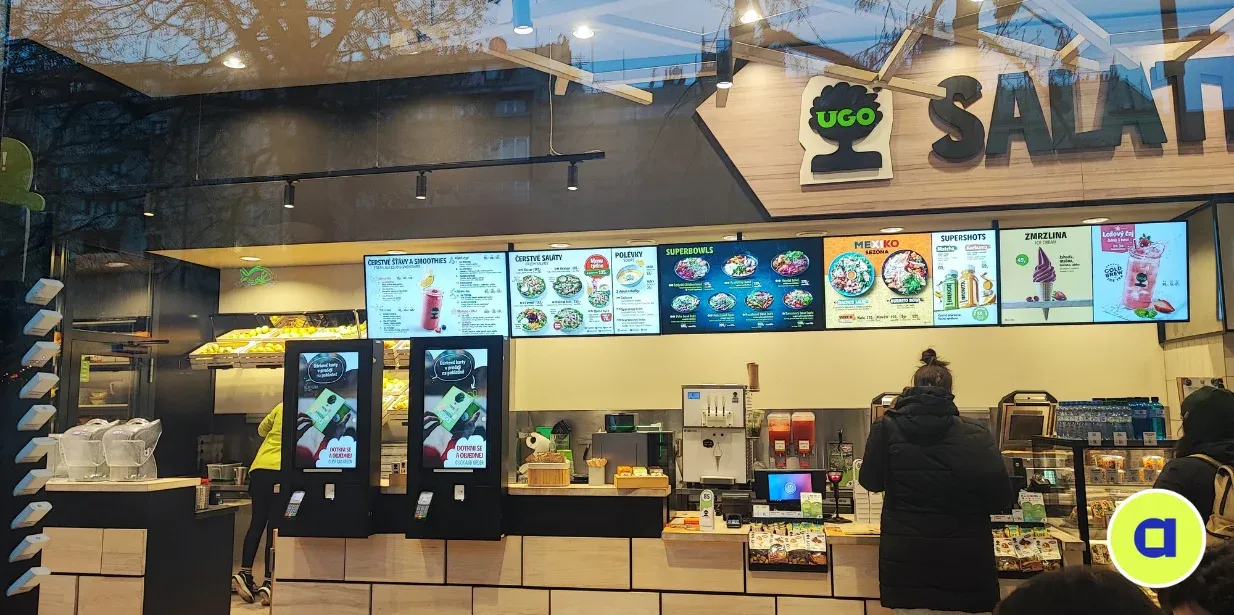
Managers may be concerned about allocating time for new processes and spending money on digital signage software. Employees may worry about changes that seem complex or could lead to job loss, as well as the need for training and adaptation to new solutions.
A digital menu is a screen where restaurant or café guests can view all available dishes and drinks, along with their descriptions, photos, and prices. menu boards are considered more convenient for visitors as they can browse the menu on their own devices. There’s no need to wait for staff, and the ordering process is faster. Additionally, digital signage software allows real-time updates to the menu, keeping it current.
Statistics show that most restaurants have adopted digital menus in some form and connected to Digital Signage platforms. Some rely entirely on digital displays, while others combine them with traditional paper menus. What myths prevent others from “going digital”?
Does creating a digital menu require a lot of time and expensive IT specialists?
A café or restaurant can create a menu without commissioning a separate website or app. For instance, using restaurant automation services. Most of these, including Restik, offer modular systems. This means you can purchase just the module responsible for digital menus. Through a computer or tablet, you can enter menu items, upload photos, and generate a link to the menu. Often, launching a menu takes just one day and minimal knowledge of digital signage players.
By comparison, creating a paper menu requires a designer and layout specialist to prepare the template, along with costs for printing, materials, and post-print processing such as lamination or binding. Time is also needed to select materials and create stylish covers or folders that match the establishment’s style. Each menu update incurs additional printing costs, unlike digital signage, where editing items takes just a few clicks.
When people see appetizing, vibrant images, they are more likely to order those dishes. Printing photos is possible but significantly increases printing costs and makes the menu bulkier. As a result, visitors often don’t have time to browse all items or quickly place an order, which affects their satisfaction with the visit.
Nobody uses digital menus
Indeed, in some regions and certain types of establishments, digital menus do not catch on due to a lack of habit in using them. Digital menus as a tool appeared relatively recently, so their use is a gradual process. However, there is already a share of the audience that chooses digital menus. This depends on the target audience of the establishment: the younger the consumers, the more guests will download the menu to their smartphones via a QR code.
In a youth snack bar, a digital menu will be an excellent solution. But in a premium restaurant, where the main audience is visitors 40+ years old, for whom ordering from a menu is part of the cultural code, and communication with the waiter is an integral part of the visit, this is a less relevant task.
For a transitional period or establishments with a mixed audience, owners often choose a combination of digital and paper menus. The paper menu is usually a single sheet with a list of dish names and prices, while a QR code allows guests to view photos and detailed descriptions of the dishes.
Digital menus are ineffective
If the menu is not in demand directly in the establishment, this does not mean that it is not used at all. The link to the menu can be shared on social networks or websites to attract guests who are still choosing a restaurant. That is, a digital menu is not only practical but also a marketing tool that works both before the order and during the visit.
For example, the digital signage system allows offering guests additional dishes or ingredients: for pizza, they immediately suggest more mozzarella, and for a glass of wine, a cheese platter. This solution, in practice, increases the average check.
Speaking of effectiveness, it is worth mentioning the ordering process itself. Thanks to Digital Signage software, stop lists can be promptly created in real-time: if something runs out, the item in the menu can be instantly hidden. In the case of a paper menu, this is physically impossible. If a guest chooses a dish, and the waiter informs them that it is unavailable, it reduces their satisfaction with the visit. The use of Digital Signage software helps avoid such situations, improves the customer experience, and increases their loyalty.
Digital menus are constantly evolving
Solutions with personalization have appeared. For example, a guest can log in through the menu, and if they have previously visited the establishment, the digital signage system will offer recommended items or bonuses. This approach allows for the automation of the dine-in format—interaction with the restaurant directly during the guest’s stay in the hall. By scanning a QR code, the guest opens an app that automatically determines their location and table, enabling them to place an order quickly.
However, a digital menu can prove ineffective if concepts are misrepresented. For example, owners upload a PDF file of the paper menu layout online and call it digital. But this is merely another way of delivering a paper menu to the client’s device.
– A PDF takes a long time to load due to its large file size.
– It is difficult or impossible to edit.
– The file is not adapted for mobile screens, making it inconvenient for clients to read descriptions or view photos.
– A PDF is not indexed by search engines, rendering it useless for promoting the establishment.
Proper implementation of Digital Signage software ensures not only effective management of digital signage but also significant improvement in communication with customers.
Efficiency checklist
Automation significantly increases the efficiency of an establishment. It allows for control of cash shifts, makes financial reporting more transparent, facilitates supply planning, tracks sales statistics for various items, maintains digital inventory records, and reduces the impact of “human error” on mistakes or violations. Digital menus are among the modern tools that help boost customer satisfaction and increase the average check, which can grow by up to 30%. To achieve this, several key aspects need to be checked.
1. Photo content preparation
The establishment must create high-quality and appetizing photos of all menu items. These should realistically convey the appearance of the finished dish, as good photo content stimulates the selection of even those items the guest initially did not plan to order. The quality of images is an important factor influencing order conversion.
2. Platform for digital solutions
A digital menu is implemented through an automation platform or specialized Digital Signage software. Small cafes or restaurants can choose a digital signage system that includes menu functionality instead of developing their own app. Using a PDF format for the menu is an ineffective solution because:
– PDF files are heavy to load and often inconvenient to use.
– They are not adapted for mobile devices, causing difficulties during viewing.
– PDFs do not support interactive features and are not indexed by search engines, making them useless for marketing.
3. Optimizing loading speed
For a digital menu to be convenient, it must load faster than being served by a waiter. Using digital signage software ensures menu performance speed even with a weak internet connection. If the establishment is located in an area with poor coverage, it is worth installing free Wi-Fi to avoid access issues with the menu.
4. Adapting to All devices
The software for screens should guarantee proper menu functionality across all types of devices and operating systems. The digital menu should easily open on smartphones with large and small screens, tablets, laptops, and more. This improves convenience for guests.
5. Marketing activities
Digital signage solutions allow integration of marketing activities into the menu, such as daily promotions, bonuses for reviews, or information about events at the establishment. For instance, banners in the digital menu can showcase new dishes, special offers, or seasonal discounts, attracting more customers.
6. Using QR codes for promotion
Place QR codes not only in the establishment but also online. Include them in social media posts, descriptions on maps and websites, and advertising campaigns. This transforms the menu into an effective marketing tool that works even outside the restaurant.
7. Combining paper and digital menus
If the establishment’s audience is mixed, simple one-page paper menus listing dishes and prices can be retained, with QR codes added for access to the extended version of the menu with photos and descriptions. This helps attract conservative guests accustomed to paper formats.
In conclusion, it is worth noting that modern Digital Signage solutions not only simplify operational processes but also open new horizons for the development of the restaurant business. By integrating screen software and menu automation, restaurant owners can interact more effectively with customers, quickly adapt to changes, and improve service quality.
This innovative approach not only makes the business more flexible but also creates an unforgettable customer experience, becoming a competitive advantage in the modern market.
Advision — Content Management System for remote management and media planning of video and audio content broadcast. We help offline businesses and advertising companies automate workflows and implement reliable Digital Signage infrastructure using our own software and hardware solutions.
Contact us and we will help you implement the most modern technologies to solve your problems!


